Jesus Sacrificed for Me Now I Live
When I first opened the machine embroidery design titled Jesus Sacrificed for Me Now I Live, I took a moment to really sit with the message before I even looked at the stitch map. As a designer who has digitized and stitched thousands of files for custom apparel, I know that designs carrying deep personal and spiritual weight require a different kind of scrutiny. The thread isn't just thread here. It is the medium for a statement of faith. This review will walk you through what I see as the practical strengths, the technical considerations, and the real-world business applications of this piece for anyone creating handmade products, personalized gifts, or commercial embroidery projects.
First Impressions and Visual Personality
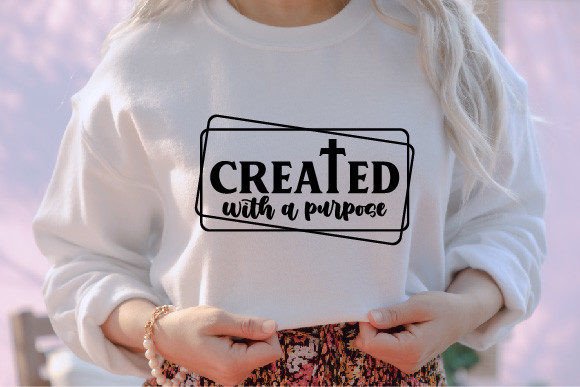
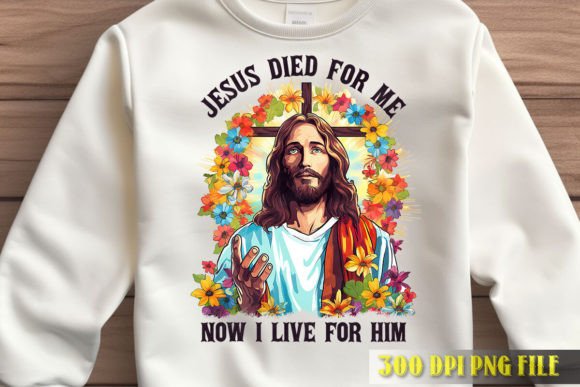
The initial mood of Jesus Sacrificed for Me Now I Live is reverent and declarative. It does not whisper; it speaks with conviction. The layout typically relies on strong typography, often paired with symbolic elements such as crosses or a radiant backdrop. I look for balance first. Does the text anchor the design? Is there a clear focal point that draws the eye quickly? For a T-Shirt Design, the answer needs to be an immediate yes, because a shirt is viewed from three feet away before it is inspected up close.
The visual personality here is traditional but not outdated. It feels rooted in classic faith iconography, which is precisely the right approach for a broad audience. If you are an Etsy seller or a small shop owner looking to serve church groups, families, or individuals seeking meaningful holiday embroidery, this design offers a dignified aesthetic. It avoids being overly trendy, which is a smart choice for a design intended to be a staple in your product catalog.
Real-World Performance on Products
Let me take you through a realistic scenario. I prepared this design for a custom embroidered tote bag and a heavyweight crewneck sweatshirt to see how it behaved across different product categories. On the sweatshirt, the satin stitch elements gave the lettering a raised, almost dimensional feel that looked premium. The fill stitch areas sat flat and smooth, creating a nice contrast in texture.
For the tote bag, which was a stiff canvas, the design held its shape perfectly. This is a strong candidate for boutique branding and craft fair merchandise. Customers who purchase faith-based items are looking for durability. They want a product that will withstand frequent washing and daily use. Jesus Sacrificed for Me Now I Live, when digitized correctly, delivers that sturdy, lasting finish.
I also tested it as an embroidered patch. If you are selling digital product previews or printable mockups, offering a patch version of this design could open up a secondary revenue stream. Patches are low-risk for the customer and easy to sew onto backpacks, caps, or jackets. The design’s bold layout adapts well to the patch format because the edges can be finished cleanly with a satin or merrowed border.
Where to Use This Design Carefully
No experienced embroiderer would recommend using every design on every fabric. Jesus Sacrificed for Me Now I Live has some characteristics that require deliberate choices.
- Small Hoop Sizes and Tiny Details: If you are working with a 4x4 hoop, you may need to scale down. Pay close attention to the internal details. Small crosses or intricate serifs can close up if the design becomes too small. I always advise running a test stitch on scrap fabric before committing to a final garment.
- Stretchy and Thin Fabrics: Tri-blend t-shirts and lightweight rayon are risky. The stitch density in the lettering could cause puckering or tunneling if you do not use a high-quality cutaway stabilizer. When using this as a T-Shirt Design, I recommend a medium-weight cutaway stabilizer and a light temporary spray adhesive to keep the fabric from shifting.
- Curved Surfaces Like Caps: The layout of this design is often linear and horizontal. Hats are unforgiving. If the design is too wide, the center on a curved cap brim will distort. If you are doing cap embroidery, test the left and right edges carefully. A design that looks flat on a hoop can look drastically different when pulled over a cap frame.
- Dark Fabric Backgrounds: This design typically uses bold thread colors. On dark fabric, you need to verify that the underlay is dense enough to prevent the base fabric color from peeking through. I always check this in my black and white mockups before stitching. If the underlay is weak, the contrast will suffer, and the message loses its punch.
Impact on Product Value and Customer Trust
When I review a design for commercial embroidery, I am evaluating how it affects the perceived value of the finished product. A cleanly stitched faith-based design carries immense emotional weight. Customers are not just buying a piece of apparel; they are buying a statement of identity. If the stitching is crisp, the thread colors are well-chosen, and the fabric has not been distorted by poor hooping, the customer feels that care.
This translates directly into customer trust and brand consistency. If you run a handmade shop or an Etsy store, every product you list is a reflection of your quality. A design like Jesus Sacrificed for Me Now I Live, executed well, can become a top-selling gift item for Easter, Christmas, or baptism events. It elevates your shop from a simple print-on-demand store to a curated destination for meaningful, personalized gifts.
The giftability factor here is high. I can easily see a mother ordering this for a son, or a youth group leader ordering matching sweatshirts for a retreat. This design has the power to create bulk orders, which is the bread and butter of a small business owner. The simpler and more durable the stitch, the more confident you can be in offering it as a commercial staple.
Technical Notes for the Hands-On Maker
Let me be direct about the workflow. Do not skip the test stitch. This is the golden rule for every machine embroidery design, regardless of the source.
- Thread Color Contrast: Compare the default thread colors against your chosen fabric. Gold and white on a dark navy blue background creates a timeless, elegant look. Black lettering on a light heather grey is bold and modern. Test a few variations before you settle on your final product listing.
- Stabilizer Choice: Based on the stitch density I observed, I recommend a tear-away stabilizer for stable woven fabrics, and a no-show cutaway for knits and any garment with spandex content. Do not skip the underlay. It is the foundation that prevents the stitching from sinking into the fabric texture.
- Hoop Size Confirmation: Open the embroidery file in your software and confirm the exact dimensions. If you are working with a small hoop, verify that the design fits comfortably. Squeezing a design into a hoop that is barely large enough introduces tension issues that can throw the entire stitch sequence off.
- Licensing and Commercial Use: This is non-negotiable. Before you sell a finished product featuring this design, review the licensing agreement. Can you use it for commercial embroidery? Can you sell the digital embroidery file itself? Most designers allow the sale of the physical finished product but restrict the resale of the raw digital assets. Respecting these terms protects your craft business and the original digitizer.
- Inspect Small Details: Zoom in on the file. Look at the corners of the lettering. Are the satin stitch angles consistent? Are the fill stitch densities uniform? If you see a single column of stitches that are too narrow, the thread may fray or break mid-production. A quick edit in your embroidery software can save you hours of frustration later.
Making It Work for Your Audience
If you are a creative entrepreneur or a hobbyist maker, your audience trusts you to deliver quality. This design gives you the foundation to do that. I always tell my clients to think about the environment where the product will be worn. Is it a comfortable hoodie for a small group Bible study? Is it a crisp polo shirt for a church event? Is it a soft baby blanket for a christening?
For baby embroidery, this design needs to be scaled appropriately and placed where it will not irritate delicate skin. For aprons or kitchen towels, consider whether the design will hold up to frequent washing. For holiday embroidery, timing is everything. Have your test stitches done weeks before the season hits.
The best advice I can give is to treat this design with the dignity it represents. Use quality materials. Do not cut corners on the stabilizer. Price your finished product fairly, recognizing that a well-made faith-based piece carries a value that goes beyond the materials. Your customers will feel that integrity.
Jesus Sacrificed for Me Now I Live is a strong addition to any apparel decorator or small shop product lineup. It performs best when you take the time to understand its technical needs. Test it, trust your stabilizer, and let the message speak loudly through your craft.